
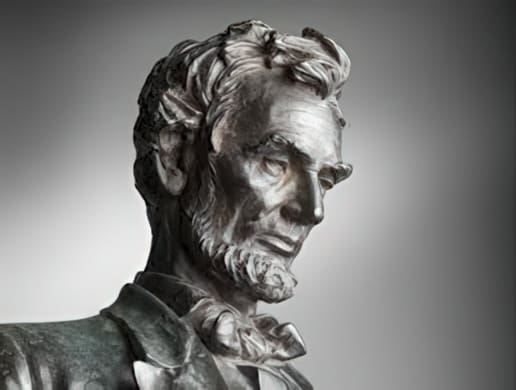
It is well documented that President Lincoln received warnings about his potential assassination from three different mediums. Moreover, Abraham Lincoln confirmed that many others wrote to him, sharing the dire premonitions they had experienced. He also had his own premonitions and dreams warning him of his death.
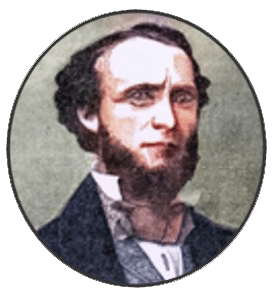
Thomas R. Hazard wrote an article entitled “J. B. Conklin at the ‘White House,’”Newport (Rhode Island) Mercury, May 16, 1868.
“Among the communications made to Mr. Lincoln were some that purported to come from the spirit of Col. Baker, in which the President was warned to be on his guard against assassination. Mr. C. remarked that he believed that Lincoln would have been President at this time had he properly heeded the warning thus given him.”[1]

This renowned spiritualist medium, who was a friend of John Wilkes Booth, gave Lincoln general warnings about assassination attempts. Given the constant threats against the President, such warnings were common, and Lincoln generally disregarded them. After the assassination, Colchester disappeared and was never questioned by authorities.
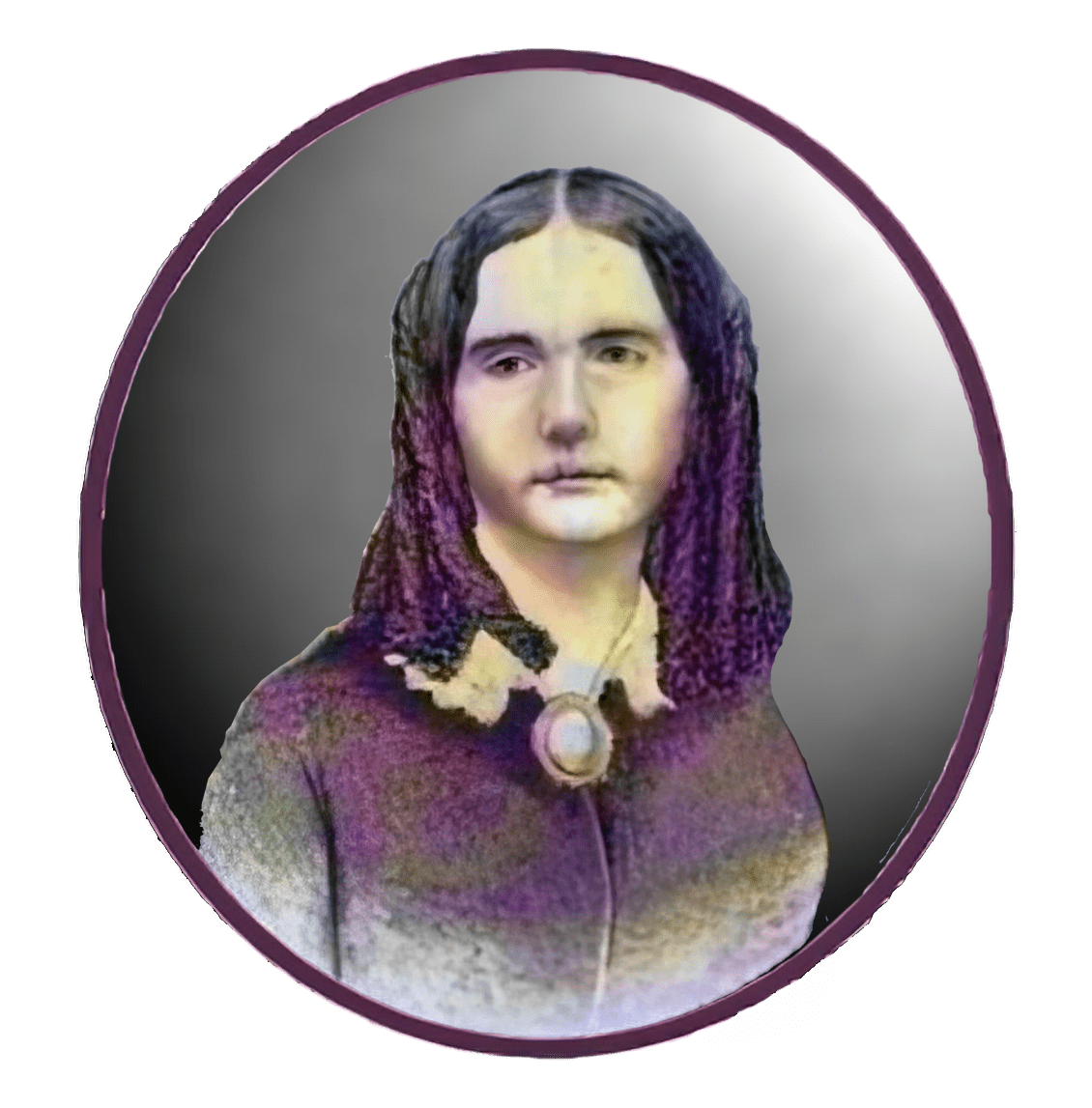
The well-known trance medium who conducted séances for President Lincoln in the White House, and in the Cranston Laurie’s house, claimed Lincoln routinely disregarded warnings about his safety.
“Just before Lincoln’s second Inauguration on March 4, 1865, Nettie Colburn visited the White House to say goodbye to President Lincoln. Her father had become ill, and she had to go back north to help care for him. In her book, Was Abraham Lincoln a Spiritualist? Nettie records her last conversation.
He [Lincoln] nodded pleasantly at the compliment, and then turning to me remarked, " But what do our friends [Spirit] say of us now ?" " What they predicted for you, Mr. Lincoln, has come to pass," I answered, " and you are to be inaugurated the second time." He nodded his head and I continued, " But they also reaffirm that the shadow they have spoken of still hangs over you." He turned half impatiently away and said, " Yes, I know. I have letters from all over the country from your kind of people — mediums, I mean — warning me against some dreadful plot against my life. But I don't think the knife is made, or the bullet run, that will reach it. Besides nobody wants to harm me." A feeling of sadness that I could not conceal nor account for came over me and I said, " Therein lies your danger, Mr. Lincoln — "your over-confidence in your fellow-men." The old melancholy look that had of late seemed, lifted from his face now fell over it, and he said in his subdued quiet way, " Well, Miss Nettie, I shall live till my work is done, and no earthly power can prevent it. And then it doesn't matter so that I am ready ––and that I ever mean to be." Brightening again he extended a hand to each of us saying, " Well, I suppose I must bid you good-by, but we shall hope to see you back again next fall." " We shall certainly come," we replied, "if you are here," without thinking of the doubts our words implied. " It looks like it now," he answered, and walking with us to a side door, with another cordial shake of the hand, we passed out of his presence for the last time. Never again would we meet his welcome smile.[2]
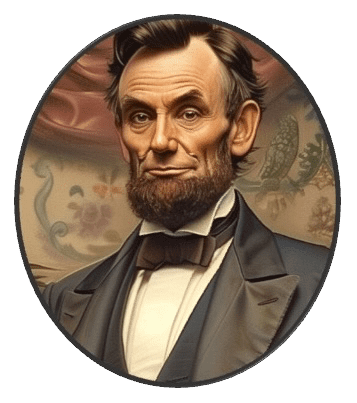
It was well known that Lincoln's own dreams forewarned him during the last weeks of his life of his pending assassination.
Lincoln Told his Dreams of the Assassination to:
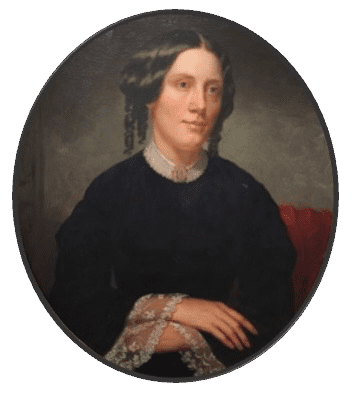
Harriet Beecher Stowe, who claimed that the Lord had directed her to write Uncle Tom's Cabin, stated that Mr. Lincoln had confided to her his certainty that death was near; and her brother, Henry Ward Beecher, said that Lincoln had known all along that he would not survive the war. But the President, being something of a fatalist, gave little evidence of fear. In spite of repeated warnings through other psychic channels, as well as his own premonitions and dreams, he awaited his inevitable hour with calm. As the date of the assassination approached, he was unusually troubled by dreams foretelling his murder, yet he still refused to take extra precautions.[3]
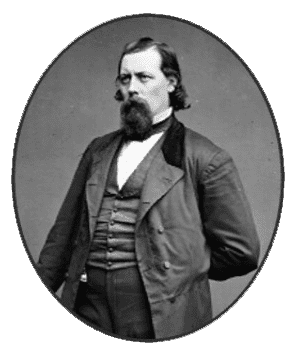
"Father, [Lincoln] the seer, the prophetic psychic, was clearly clairvoyant and precisely precognitive during those weeks preceding Good Friday in 1865. Pa’s bodyguard, Lamon, prided himself on knowing more about Pa’s presentiments or premonitions than most people. …Lamon, who was not too far from accepting Pa’s philosophy himself, continued; “Long before Lincoln’s admission to the bar or his entrance into politics, he believed he was destined to rise to a great height; that from a lofty station to which he would be called, he would be able to confer lasting benefits on his fellowmen. He believed also from a lofty station he would fall.”1° Much of this was Lamon, rather than Lincoln talking."[4]
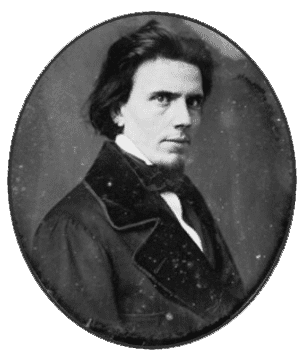
One day the artist Carpenter assured Pa his efforts would be rewarded. Pa mused; “I may never live to see it. I feel a presentiment that I shall not outlast the rebellion. When it is over, my work is done.”’!? Carpenter named others, including Harriet Beecher Stowe, to whom Pa made similar statements.[5]
Footnotes
[1] Hazard Thomas R. “J. B. Conklin at the ‘White House.” Newport Mercury [(Newspaper-Rhode Island]. 16-May 1868. Quoted by: Buescher, John Benedict. The President’s Medium: John Conklin, Abraham Lincoln, and the Emancipation Proclamation. Forest Grove, Oregon: The International Association for the Preservation of Spiritualist and Occult Periodicals, 201, 5. p. 82.
[2] Maynard Nettie Colburn. Was Abraham Lincoln A Spiritualist? or Curious Revelations From A Trance Medium. Philadelphia, PA: Rufus C. Hartranft, 1891. pp. 181-182.
[3] Shelton, Harriet M. Abraham Lincoln Returns. NY: Evans Pub. Co., 1957. p. 209.
[4] Lamon, Ward H. Recollections Chicago, IL: A. C. McClure & Co., 1895. p. 112. Quoted by: Fleckles, Elliott V. Willie Speaks Out! The Psychic World of Abraham. Lincoln. St. Paul, MN: Llewellyn Publications, 1974. p. 152.
[5] Carpenter, F. B. Six Months in the White House: Inner Life of Lincoln. NY. Hurd & Houghton, 1866. p. 263. Quoted by Fleckles, Elliott V. Willie Speaks Out! The Psychic World of Abraham. Lincoln. St. Paul, MN: Llewellyn Publications, 1974. p. 152.