Little House in the Sepulchre-Mediumship Found Everywhere!
When I recently scanned Yahoo, I found an article that immediately caught my eye. The author’s use of a particular phrase instantly inspired me to research further. What I discovered was indeed ground-breaking: a pioneering new mediumistic connotation for an “old idea.” Once again, I would prove: “If you scratch the surface of religious history, it will bleed mediumship or psychic science.”
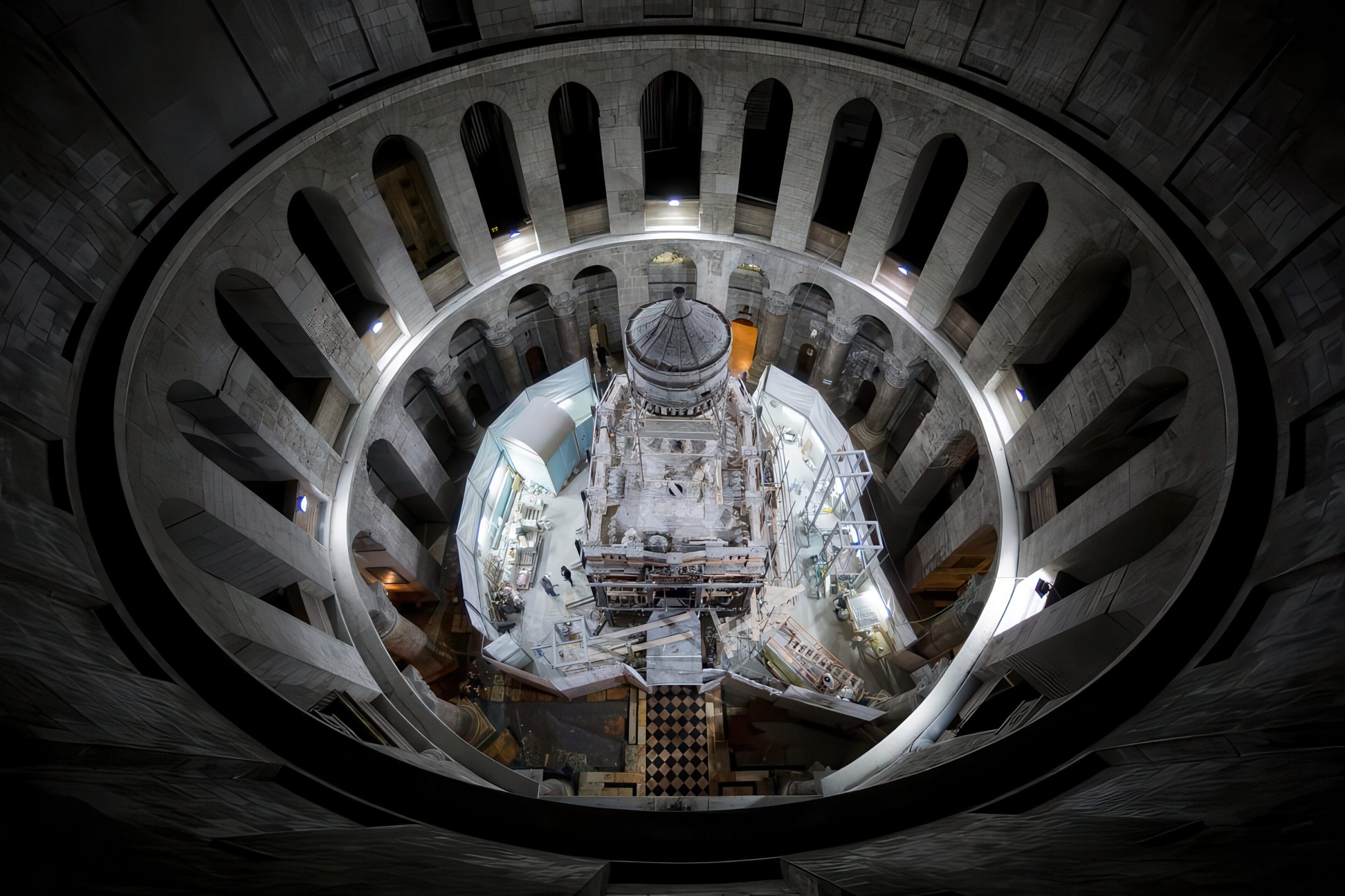
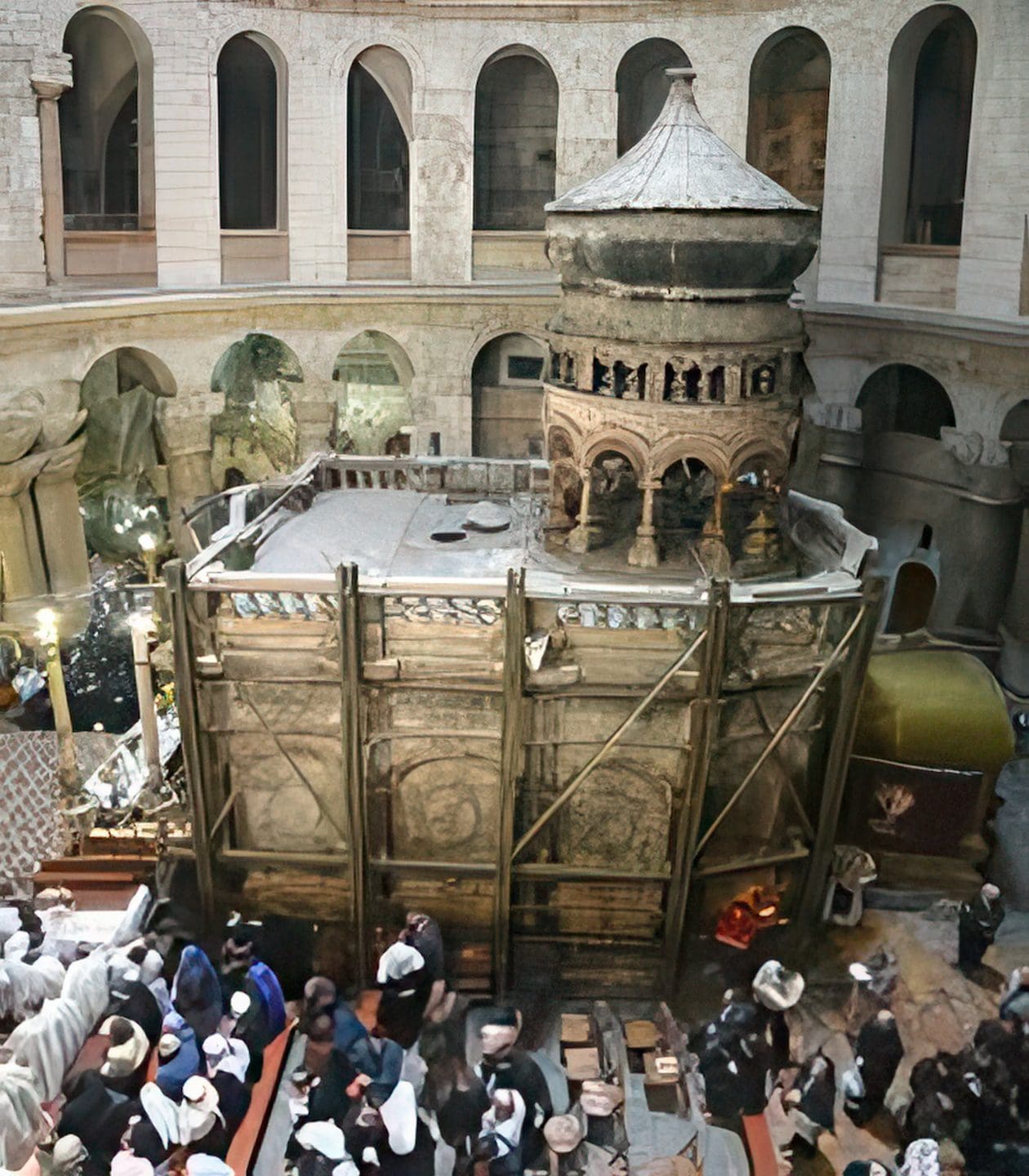
I found an article entitled “Christ’s Burial Place Exposed for the First Time in Centuries.”[1] It was written by Kristin Romey and published on the National Geographic Society’s website on October 26, 2016. The article discussed a renovation project in the Church of the Holy Sepulchre in the Old City of Jerusalem, which contains Jesus’s tomb.
Before discussing the details of the article, let me provide some history of this historic church. Constantine the Great was the Roman Emperor who changed the Roman Empire’s official religion from paganism to Christianity. He sent his mother, Helena, to the Holy Land to find holy Christian sites described in the New Testament. Helena found the site of Calvary and the tomb of Jesus, and in 326, she was present for the construction of the Church of the Holy Sepulchre.[2]
Ms. Romey wrote in her article:
“For the first time in centuries, scientists have exposed the original surface of what is traditionally considered the tomb of Jesus Christ. Located in the Church of the Holy Sepulcher in the Old City of Jerusalem, the tomb has been covered by marble cladding since at least 1555 A.D., and most likely centuries earlier.”
For the first time in centuries, people will
“be able to see the original rock surface on which, according to tradition, the body of Christ was laid.”
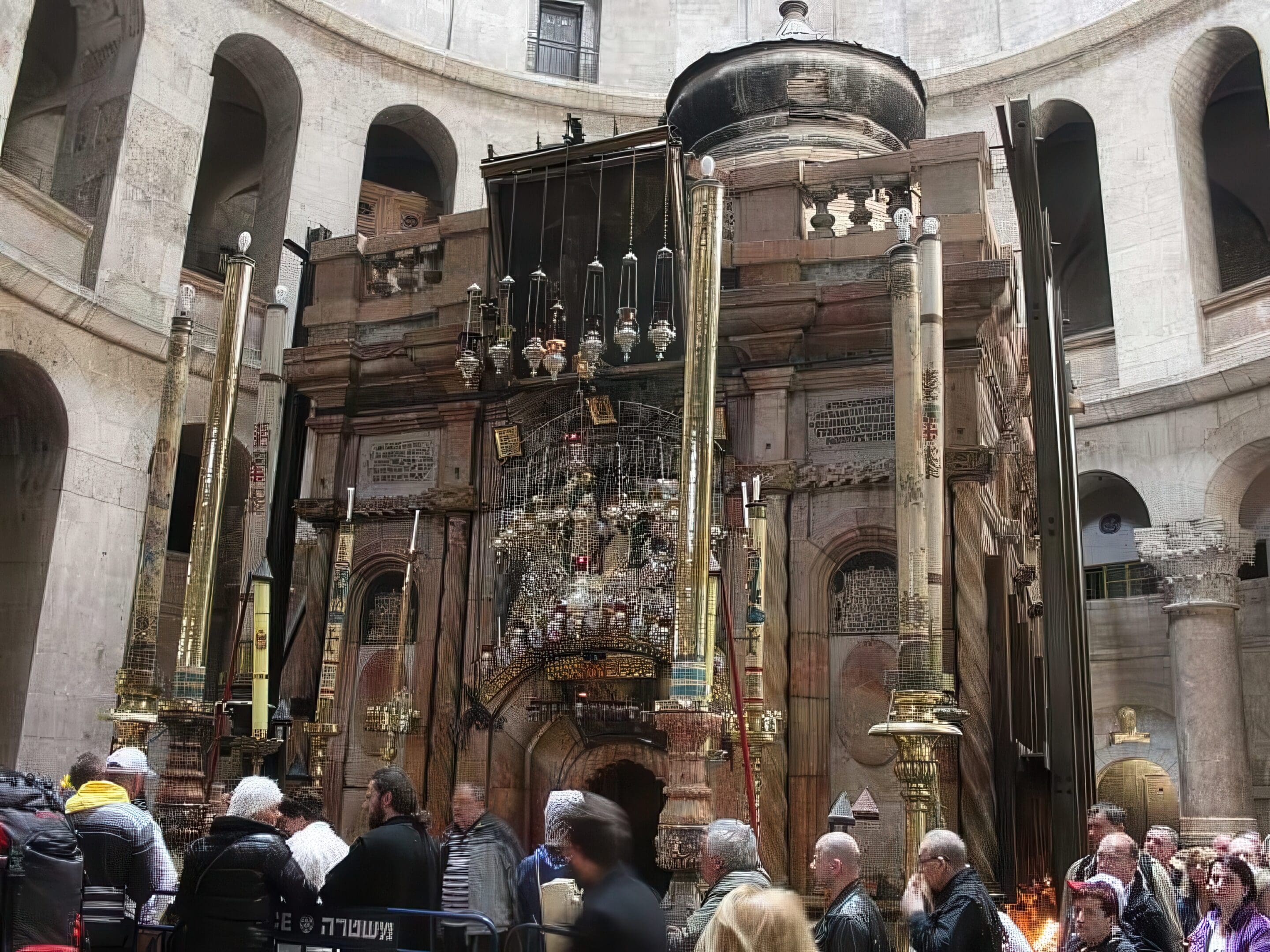
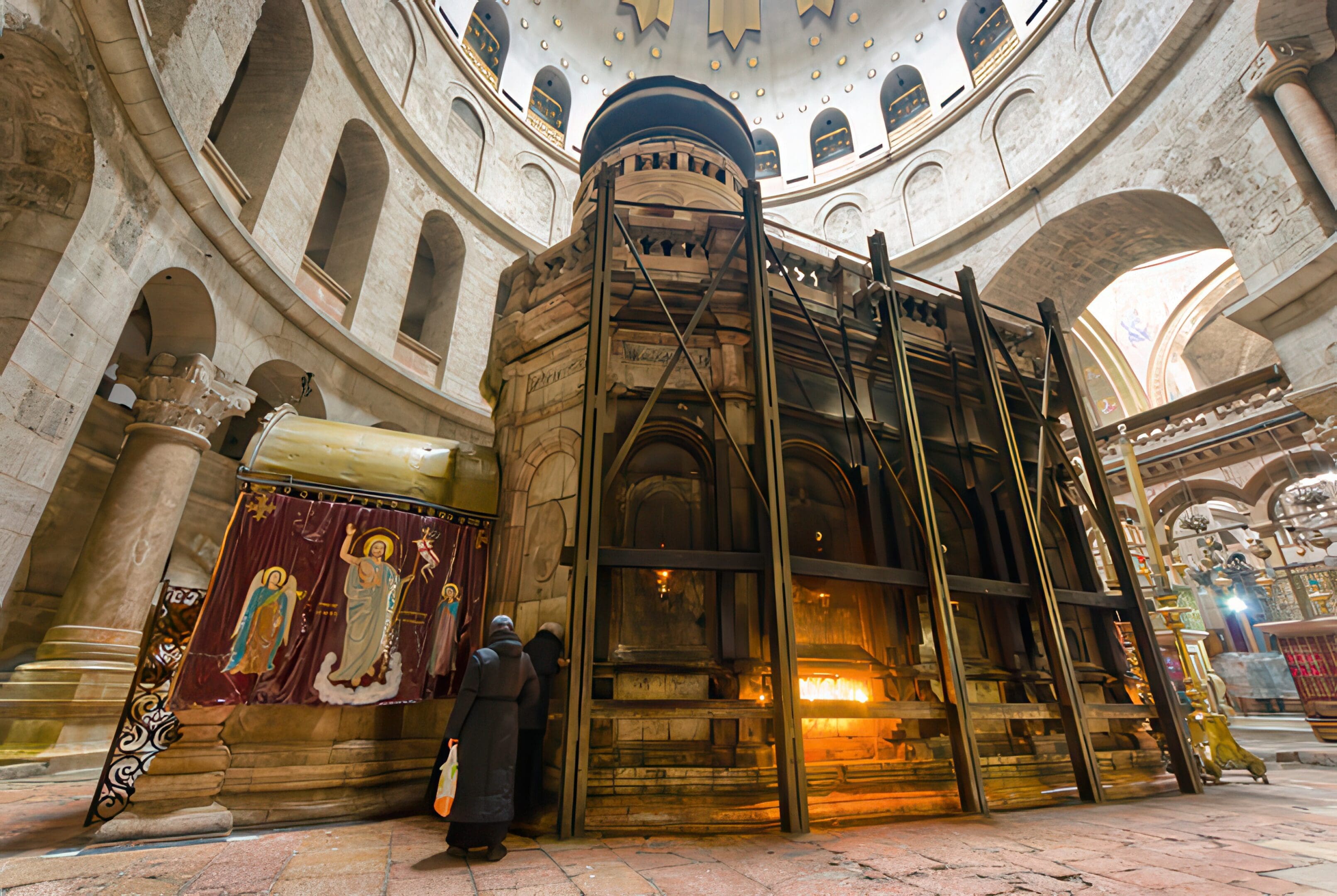
This burial shelf is now enclosed by a small structure known as the Edicule (from the Latin aedicule, or “little house”), which was last reconstructed in 1808-1810 after being destroyed in a fire.
I had no idea an edicule or “little house” had been built over Jesus’ tomb. However, a more important question came to mind: why was the edicule built? I think I can provide an answer using the major clue that Ms. Romey provided. An edicule was a “little house.”
For the last 38 years, I have compiled a database of Bible verses that contained demonstrations of mediumship or prohibited mediumship. I have examined 473 Bibles and collected 135,176 verses from the Old Testament and 142,100 verses in the New Testament. Due to my extensive research on mediumship in the Bible, I knew of another verse in which Bible translators used the phrase “little house.”
Therefore, I immediately did a Google search for an interlinear Latin-English version of the Vulgate Bible. Once I located the website, I searched 2 Kings 23:7 and discovered these two crucial words.
aediculas effeminatorum
My suspicion was correct. The Latin word aediculas was in this verse, the same Latin word aedicule that Ms. Romey quoted in her article. “Little houses” would be a literal translation of the Hebrew word בָּתֵּי found in this verse.
This is the English translation of 2 Kings 23:7, as it appears in the Douay Bible of 1609, an English translation of the Vulgate Bible.
He destroyed also the little houses of the effeminates which were in the house of our Lord, for the which the women wove as it were little houses of the grove [Douay -1609].
I need to explain the context of this verse, both in the Bible story and its historical perspective. The High priest just confronted Hezekiah King Josiah of Judah. Hezekiah had just discovered a scroll of the book of Deuteronomy, that had been misplaced in the basement of the Holy Temple. Upon reading the scroll, Hezekiah realized the Hebrews had not been following the laws God had prescribed in Deuteronomy. He brought this violation to the attention of King Josiah. Josiah decided a religious reform was needed to comply with the laws in the book of Deuteronomy. Part of this reform forced the Hebrews to abandon attending their Canaanite neighbors’ religious celebrations and rites. The Canaanites worshiped the god Baal and the goddess Asherah (sometimes called Astarte).
A group of male mediums would enter a trance state and channel the goddess Asherah. The name of these mediums in Hebrew is קְּדֵשִׁים/qadeshim, which is translated as sodomites or prostitutes. However, I need to point out that in Biblical Hebrew, the vowels (the little dots and dashes underneath the letters) were never written down. Therefore, in the original Hebrew scroll for this verse, the letters קדשים could be translated as sodomites as well as holy ones.
Many civilizations of the ancient Middle East practiced sympathetic magic. Simply put, humans would act out a ritual and expect the gods to mimic them and perform the same act. One of these rituals was called the Sacred Marriage,[3] where once a year, the King of Sumer had sexual relations with the high priestess. The gods would mimic this act of procreation and send plentiful rain, ensuring the crops would be prolific and there would be enough food to feed the people of Sumer in the coming year. To our 21st-century minds, this concept is ridiculous. Our knowledge of science and rational thinking tells us this ritual is heavily flawed. However, people living in ancient times lacked an understanding of science. Sympathetic magic in the form of sacred marriage was their belief, not only in Sumer but in Canaan as well.
While the ancient people lacked scientific knowledge, they understood most principles of psychic science and the law of attraction, where “like attracts like.”[4] The male mediums thought that making themselves as feminine as possible would facilitate their ability to channel the goddess! Therefore, the קְּדֵשִׁים/qadeshim would dress and act as women. The Galli, a group of male mediums who channeled the Phrygian goddess Cybele, went so far as to castrate themselves to make themselves as female as possible.
Returning to the קְּדֵשִׁים/qadeshim, Canaanite men would go to have an audience with the goddess Asherah and have sex with her, though the male קְּדֵשִׁים/qadeshim’s body, while asking the goddess for prolific crops. This activity took place in the small little houses made of curtains. It is factual that Canaanite men were having homosexual sex as part of their religious rituals. This is the reason the prohibition of gay sex was written into the Bible.
“If a man also lie with mankind, as he lieth with a woman, both of them have committed an abomination: they shall surely be put to death; their blood shall be upon them.”[5]
However, most people do not realize that the word abomination is not correctly translated in this verse. The original Hebrew word is תֹּועֵבָה//to’ebhah and does not mean abomination, but idolatry!
… it is not the act itself [homosexual sex] which is condemned but rather its association with non-YHWHist worship — which the ancient Jews saw as and referred to as “idol worship” [תֹּועֵבָה] to’ebhah.[6]
Saint Jerome was the first Bible translator to translate [תֹּועֵבָה] to’ebhah as abomination when he wrote his Latin Vulgate translation of the Holy Bible.[7]
If we strip away the sexual connotation of this ritual, we are left with entranced mediums inside small houses that modern Spiritualists would call cabinets. This is verified when we examine the wording of another translation of 2 Kings 23:7.
He broke down the houses of the men who sold the use of their bodies in the Lord’s house for their false gods. The women were making special curtains for the false goddess Asherah in these houses [NLFV- 1986].
The curtains were hung on poles that created a cabinet. Norman Blunsdon defines the word cabinet as:
A small space enclosed usually by a curtain, in which most materialization mediums claim to condense the psychic energy [ectoplasm] for manifestation.[8]
What becomes truly fascinating is that the Hebrew word בית /bayit, which is usually translated as house, is associated with the word container, which is the exact function of a medium’s cabinet.
The fundamental meaning of the word בית (bayit) appears to be a kind of enclosure, specifically for keeping, safekeeping or containing, and is contrasted by a wide array of specialized words meaning any kind of specific habitat, ranging from tent to palace. In that sense, the word בית (bayit) does not denote a specific kind of building, but rather the function of container.[9]
The Vulgate Latin Bible calls the cabinets or little houses aediculas, the same name used for the “little house they built over Jesus’ tomb. The early church fathers put Jesus in a medium’s cabinet!
However, this is not the first time this has happened.
Other aediculae were small shrines within larger temples…. From the 4th century Christianization of the Roman Empire onwards such shrines, or the framework enclosing them, are often called by the Biblical term tabernacle….
This quotation now links edicules with tabernacles, which immediately made my mind jump to the Gospel of Luke 9:28-36, which records the story of the Mount of Transfiguration. Jesus had brought his three most advanced students, Peter, John, and James, up to a mountaintop to escape all negative vibrations. Then, Jesus began to demonstrate the gift of materialization. Suddenly Jesus became dazzling white, as ectoplasm was withdrawn from his body. Two pillars of cloud or ectoplasm formed, and Moses, who had been dead for 1482 years, and Elijah, who had been dead for 928 years, materialized and began to converse with Jesus. Peter became very excited and said:
Master, it is good for us to be here: and let us make three tabernacles; one for thee, and one for Moses, and one for Elias [Elijah]: not knowing what he said.[10]
While the King James Version translates the Greek word σκηνὰς as tabernacle, other Bible translators have created many different terms.
altars,[11] apartments,[12] arbors,[13] booths,[14] bowers,[15] chapels,[16]churches,[17] dwellings,[18] dwelling-places,[19] historical markers,[20] holy tents,[21] huts,[22] memorials,[23] places,[24] places of shelter,[25] sacred tents,[26] shelters,[27] shelters of leafy boughs,[28] shrines,[29] structures,[30] sukkot,[31] tabernacles,[32] temporary sanctuaries,[33] tents.[34]
While the Bible tells us that Peter had no idea what he was saying, this is obviously false. Peter understood a medium must be inside a cabinet (tabernacle or edicule) for the gift of materialization to take place. Other people knowledgeable in psychic science also understand the need for the cabinet in this case.
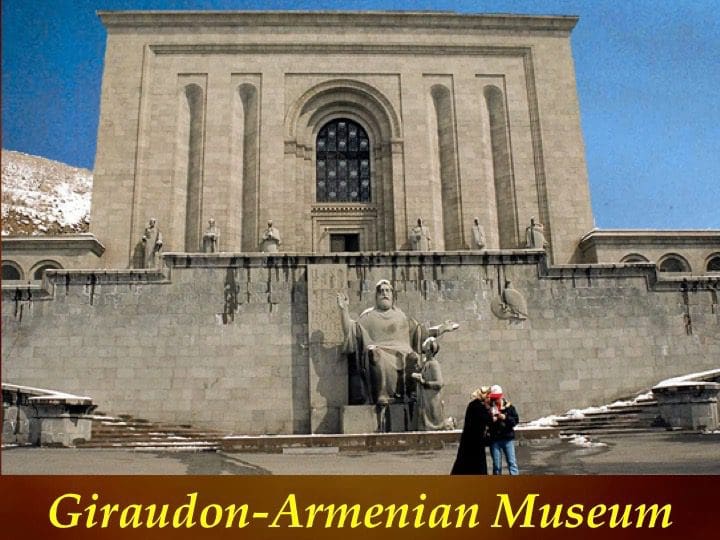
A children’s book entitled Who is Jesus?: Son of God, Son of Man has a picture from an Ovanes, Armenian Miniature manuscript, housed in the Giraudon-Armenian Museum in Esfahan, Iran. This manuscript of the story of Jesus on the Mount of Transfiguration has an illustration of Jesus standing inside a box, which is a cabinet, tabernacle, or edicule! [35]
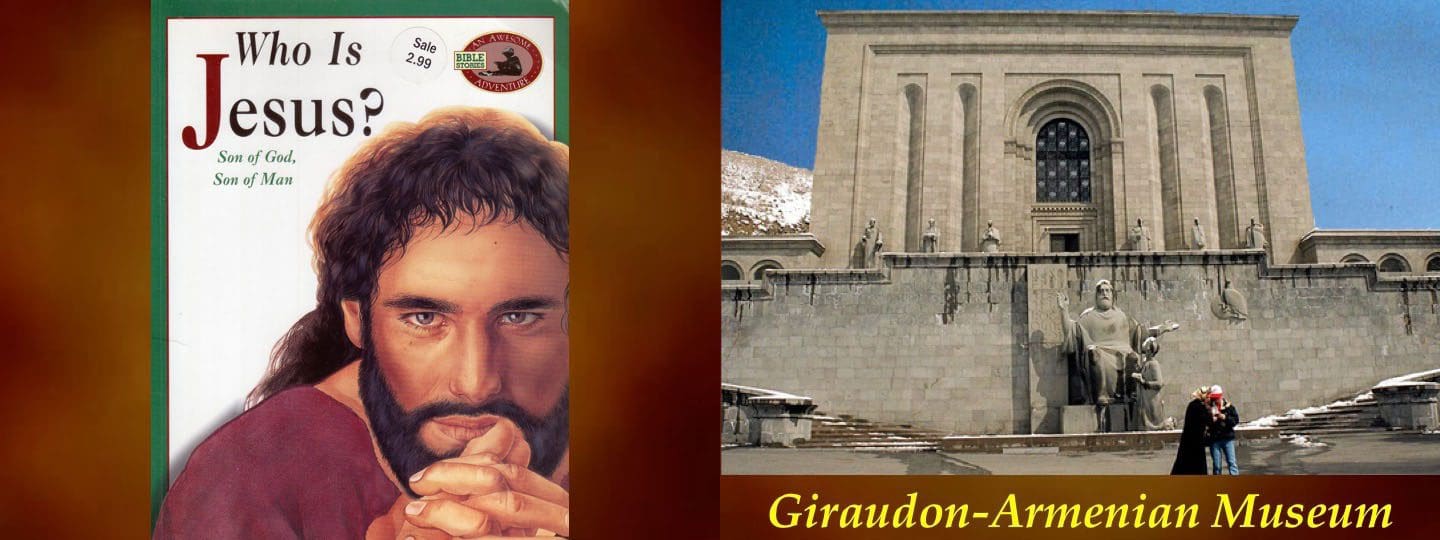
This absolutely validates that Peter understood psychic science when he offered to make three tabernacles on the Mount of Transfiguration.
By building an edicule over Jesus’ tomb, the Christian fathers followed the Jewish patriarchs’ footsteps. After Jacob awoke from his famous dream of angels ascending and descending on a ladder (which represented the different levels of the Spirit World), he said:
“How awesome is this place! This is none other than the house of God, and this is the gate of heaven. So Jacob rose early in the morning, and he took the stone which he had put under his head and set it up for a pillar and poured oil on the top of it. He called the name of that place Bethel.”[36]
Jacob felt he had directly communicated with God in his dream and immediately created a pillar called Bethel, which literally means the house of God. A stone pillar could not be considered a house even in Biblical days. However, in Biblical days, people did dwell in tents. Jacob could sit against his stone pillar, cover himself with a sheepskin or another type of blanket, and create a “house/tent/edicule” of God by making himself a temporary cabinet.
In Moses’ Meeting tent, “the Lord spoke to Moses face to face as a man speaks with his friend.”[37] The Lord had materialized and spoke to Moses, settled disputes,[38] and answered people’s questions.[39]
The holy of holies in Solomon’s temple served as a cabinet where the High Priest would go and communicate with God on Yom Kippur.
Therefore, it is not surprising that Church Fathers placed Jesus’ tomb in an edicule or “little house.” It was the site of the resurrection, which provided Church fathers an excuse to transform the man Jesus, who demonstrated all the gifts of the Spirit, into a Savior God. How ironic that they put Jesus back into a medium’s cabinet, a place familiar to him.
 |  |
 |  |
[1] Romey, Kristin. “Christ’s Burial Place Exposed for First Time in Centuries.” National Geographic. National Geographic Society, 26 Oct. 2016. Web. 27 Oct. 2016. <http://news.nationalgeographic .com/2016/10/jesus-tomb-opened-church-holy-sepulchre/>.
[2] “History of the Church of the Holy Sepulchre.” Wikipedia. Wikimedia Foundation, n. d. Web. 27 Oct. 2016. <https://en.wikipedia.org/wiki/History_of_the_Church_of_the_Holy_Sepulchre>.
[3] Barker, Melissa. “The Sacred Marriage Ritual of the Sumerians and the Kings That Practiced It.” Academia.edu. N.p., n.d. Web. 08 Nov. 2016. <http://www.academia.edu/6101327/Sacred_ Marriage_ritual>.
[4] Blunsdon, Norman “A Popular Dictionary of Spiritualism.” NY: Citadel Press, 1962.p. 22.
[5] Leviticus 20:13 [King James Version -1611].
[6] Ide, Arthur Frederick. Gomorrah & the Rise of Homophobia. Las Colinas, TX: Liberal Press, 1985. p. 3-4.
[7] Dynes, Wayne R., ed. “Abomination.” Encyclopedia of Homosexuality. Vol. 1. NY: Garland Publishing, Inc., 1990. p. 4.
[8] Blunsdon, Norman “A Popular Dictionary of Spiritualism.” NY: Citadel Press, 1962.p. 37.
[9] Publications, Arie Uittenbogaard for Abarim. “The Amazing Name Bethel: Meaning and Etymology.” Abarim Publications. N.p., n.d. Web. 12 Nov. 2016. <http://www.abarim-publications.com/Meaning/Bethel.html#.WCc1VtxWmQ4>.
[10] Luke 9:33 [King James Version-1611].
[11] NLFB-1983
[12] MACE-1750
[13] KNOX-1944
[14] THOM-1808
[15] ORIG-1985
[16] CPV – 1969
[17] ABBR-1971
[18] FENT-1922
[19] PRYSE-1916
[20] WMF-1975
[21] IEB-2001
[22] SMGO-1939
[23] Mess-2002
[24] WWENT-1969
[25] GNC-1989
[26] NCS-1994
[27] LAMSA-1933
[28] REB-1937
[29] NORL-1962
[30] TVB-2012
[31] OJBC- 1997
[32] LWYC-1381
[33] GIFT-2011
[34] WESL-1755
[35] Who is Jesus?: Son of God, Son of Man. Green Forest, AR: Master Books/New Leaf Press, 2000. p. 26.
[36] Genesis 28:17-19 [RSV].
[37] Exodus 33:11 [EXB].
[38] Exodus 33:7 [KNOX].
[39] Exodus 33:7 [AEB].