
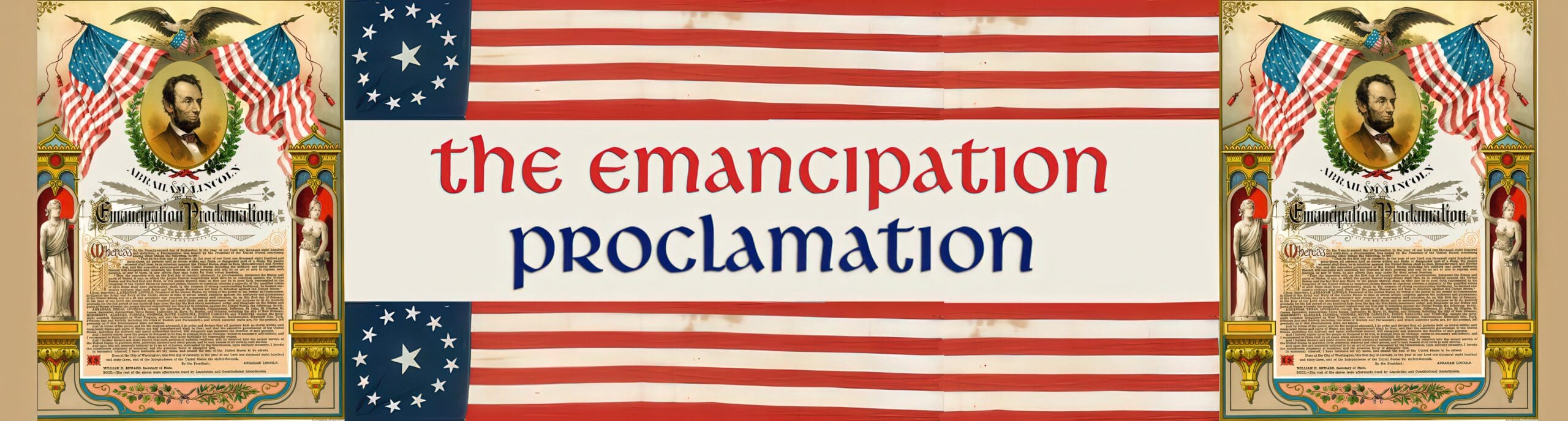
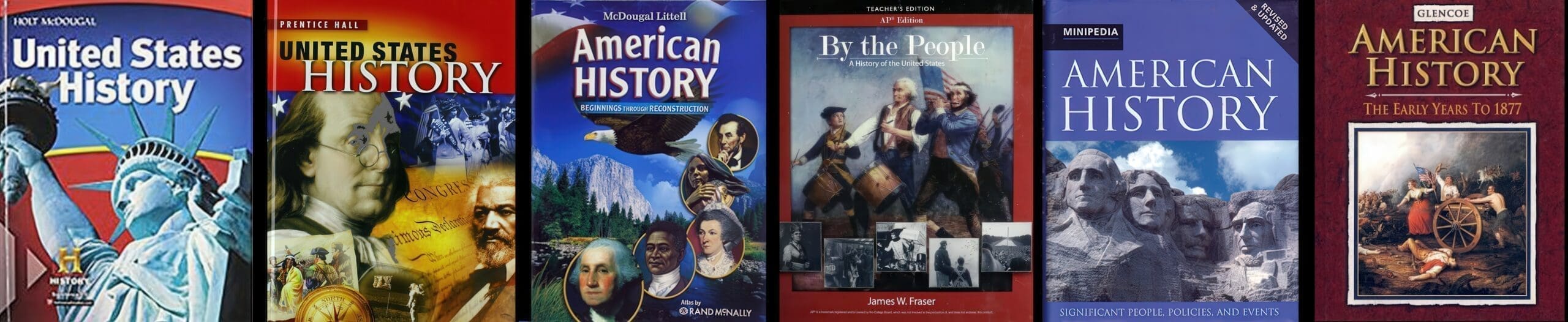
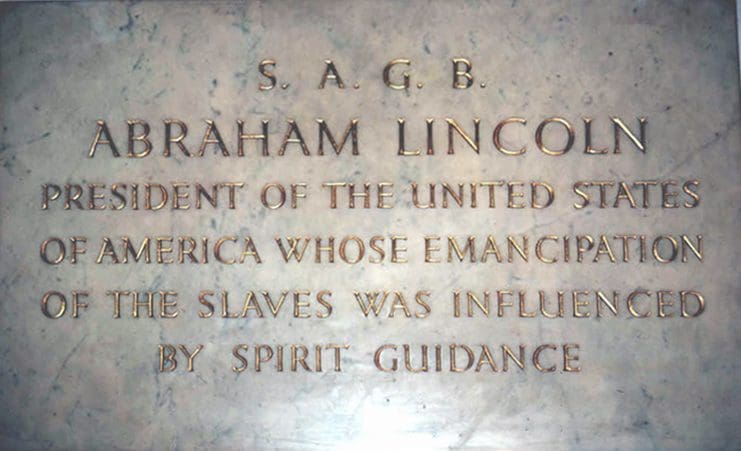
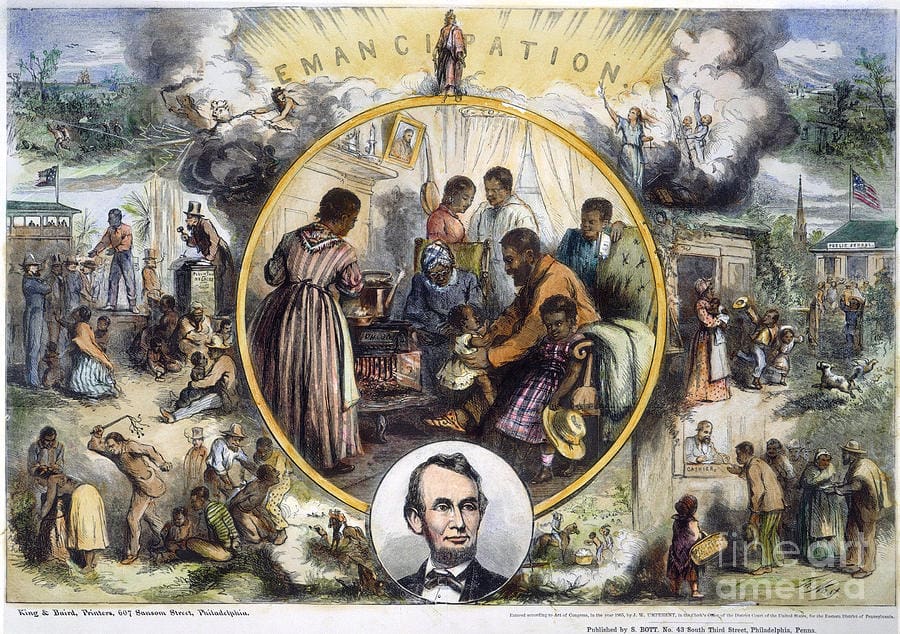
The fact that Abraham Lincoln consulted Spiritualist Mediums and even attended séances in the White House is NOT found in any middle or high school American History textbook. Therefore, the average American is utterly oblivious to the fact that Lincoln’s Emancipation Proclamation, which freed the slaves, was inspired by the Spirit World.
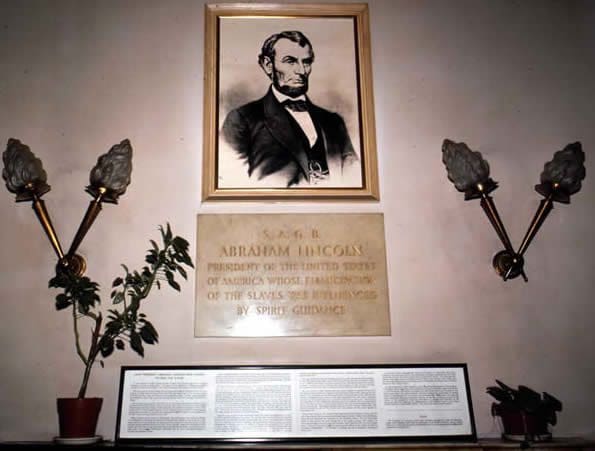
It is ironic that people who visited SAGB (Spiritualist Association of Great Britain) at 33 Belgrave Square in London, England, would see this display honoring this historic event in one of their sitting rooms.
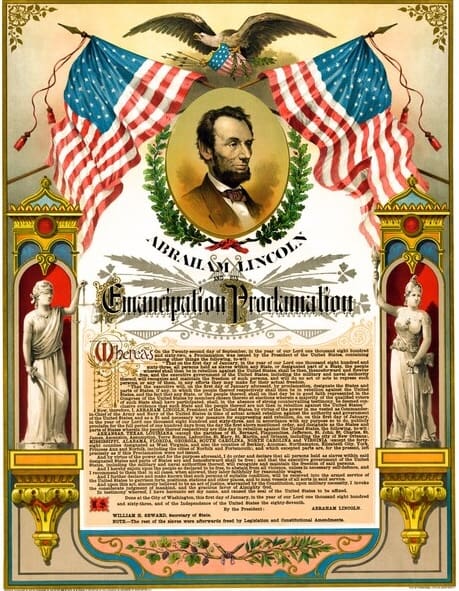
The Emancipation Proclamation
Viewed today as a landmark decision that changed the Civil War from a battle to preserve the Union to a war over the freedom of the slaves, the Emancipation Proclamation was not greeted with universal acclaim in the North.[1]

Opposing Views on Issuing
The Emancipation Proclamation
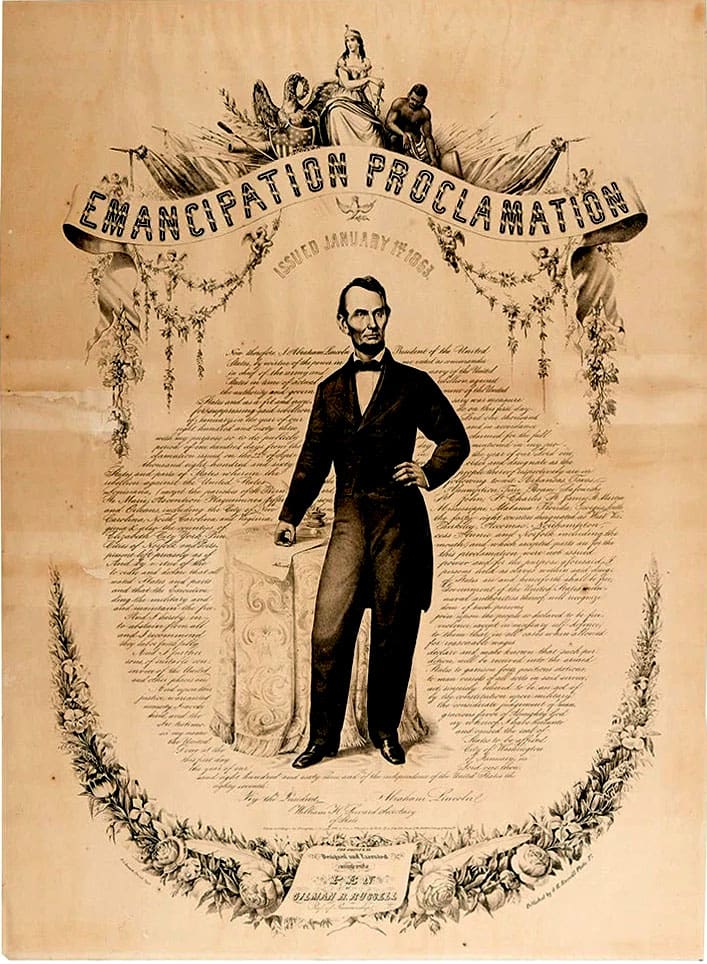
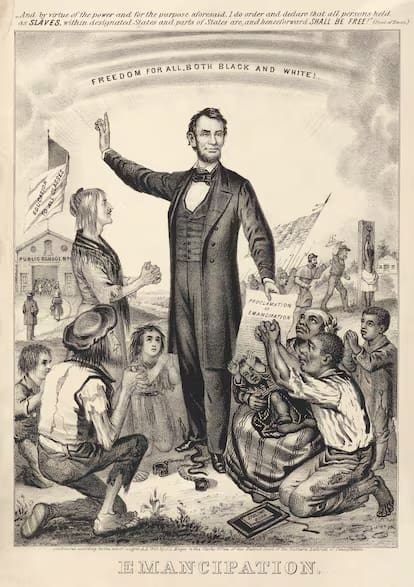
Supporters believed it was a necessary and strong war measure to weaken the Confederacy by depriving it of its enslaved labor force, allowing more white men to be sent into the military. The Proclamation was a moral necessity that framed the Civil War as a fight not only to save the Union but also to end slavery, which would help prevent foreign powers like Britain and France from supporting the Confederacy. It changed the goals of the war to explicitly include the eradication of slavery, in addition to preserving the Union.
Opponents feared that the President did not have the constitutional authority to abolish slavery, as it was a matter protected by state law. Issuing the proclamation before the Union's military position was strong could be interpreted as an act of desperation and might push the loyal border states to secede. Furthermore, Many white Northerners worried about the social and economic consequences of millions of newly freed people moving north, fearing job competition and lower wages.
Some abolitionists opposed the proclamation because it didn't go far enough, as it did not apply to the border states or to areas of the Confederacy that were already under Union control.
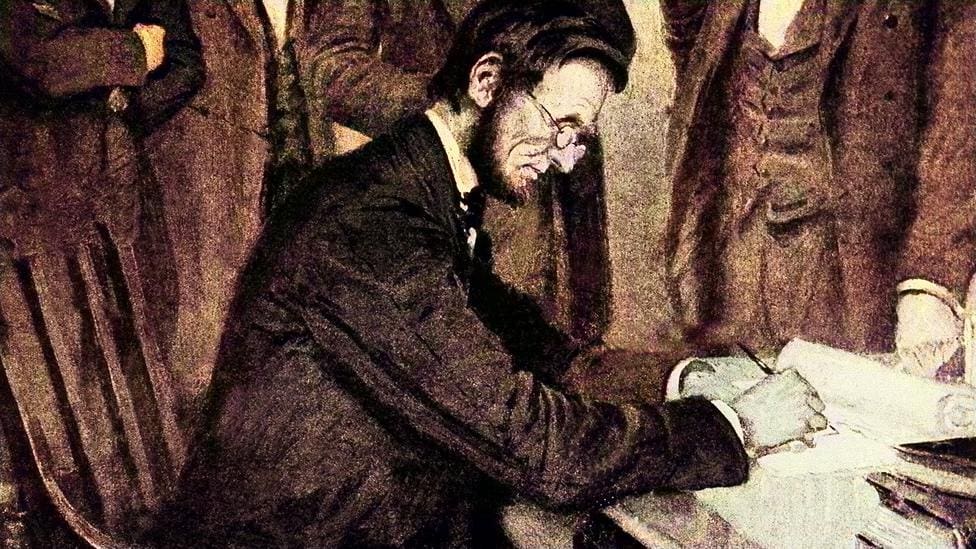
While the President expected to receive criticism over the Emancipation Proclamation, the amount he did receive nearly overwhelmed him. The pressure President Lincoln received to retract the Proclamation was intense. As January 1, 1863, loomed, the President was besieged from both sides of the issue. For support and guidance Lincoln turned to his inner circle.[2]
Lincoln's Beliefs on Slavery
Lincoln’s personal beliefs on slavery were complex and evolved over his lifetime. He consistently maintained a strong moral opposition to the institution of slavery itself but held views on racial equality that were typical of a white man of his era. Ultimately, while Lincoln personally detested slavery, his political actions were often guided by the need to preserve the Union. His perspective and policies demonstrated growth throughout his presidency.
"…in a letter to Horace Greeley in August, 1862, Lincoln said: " My paramount is to save the union, and not either to save or destroy slavery. The anti-slavery proclamation was September, 1862, and was issued in January 1863. The change in Lincoln's attitude was mainly brought about by the influence of Senator Thomas Richmond, by his experiences through the mediums J. B. Conklin, Mrs. Cranston Laurie, Mrs. Miller, Nettie Colburn and by Dr. Farnsworth's predictions."[3]
Mediums who Influenced Lincoln’s Position
on The Emancipation Proclamation
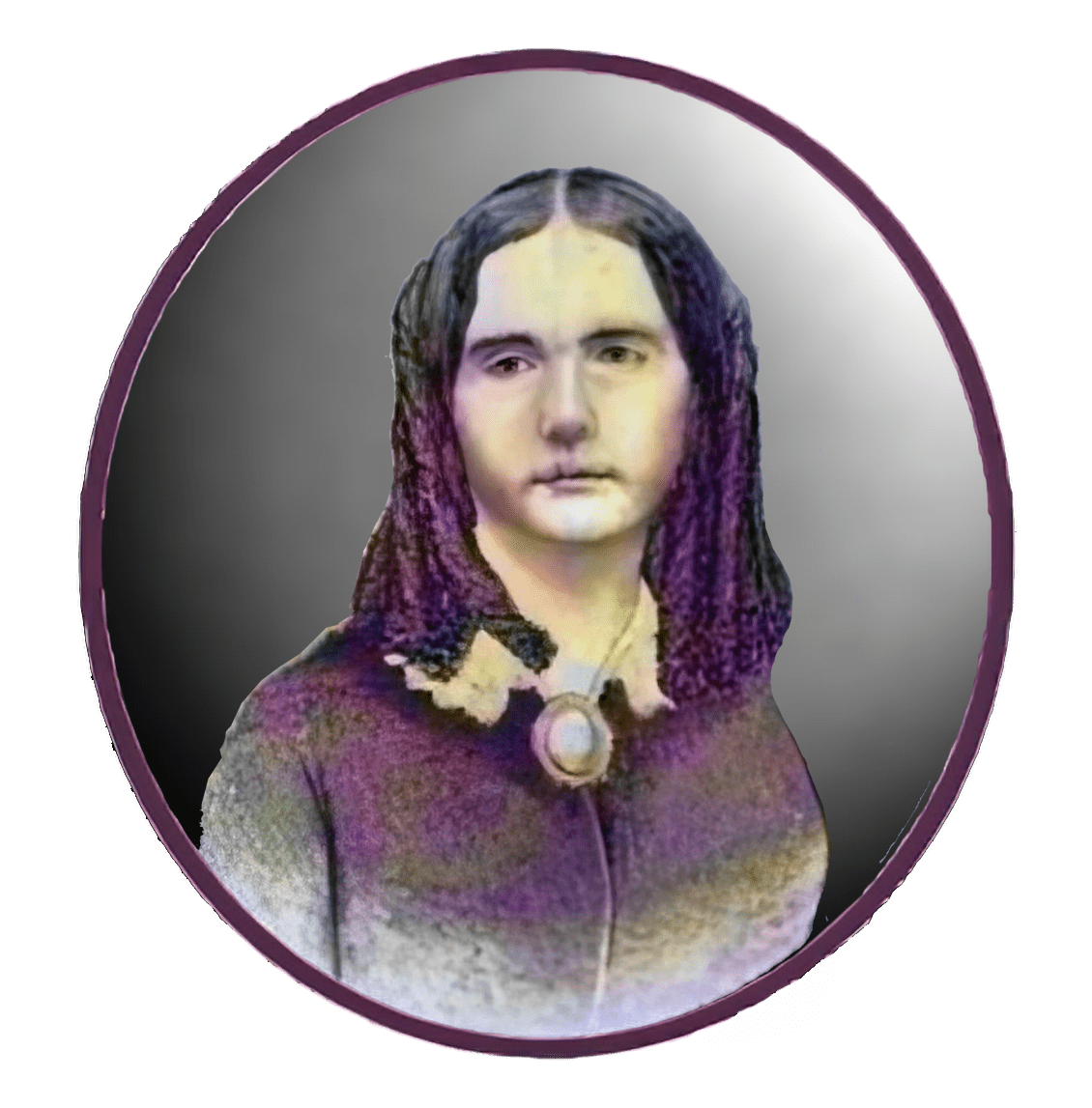
It was on this occasion [a séance at the Laurie’s house] that the gifted Nettie Colburn delivered a spirit message on the Proclamation. As for Pa [Lincoln], it led to the emancipation of the emancipator as well. It was not merely the spirit message but the spirit of the message which gripped Father.[4] Col. Simon P. Kase witnessed Nettie’s trance speaking. “Kase has said, “Thus it was that the president was convinced as to the course he should pursue. The command coming from the All-seeing Spirit through the instrumentality of the angelic world was not to be overlooked.””[5]
Nettie loses all consciousness of her surroundings and “passes under control.”
For more than an hour, the unconscious young lady holds forth on various subjects to the President, mostly on matters of state.… Although her controlling spirit holds forth on many issues to Lincoln, it isn’t until the spirit inhabiting her starts discussing the Emancipation Proclamation that the other people in the room make any sense of the “spirit lecture.” Channeling a masculine entity (or so it seems), Nettie exhorted Lincoln “not to delay its enforcement as a law beyond the opening of the year.” Nettie’s controlling spirit goes on to tell Lincoln that it is to be the crowning event of [your] administration and life.”[6]
Arthur Conan Doyle writes: "Upon the entrance of the President she [Miss Nettie Colborn] was at once entranced and spoke for an hour in a most convincing and commanding way. Spectators seemed to have recognized terms of speech which recalled Daniel Webster. ‘Those present declared that they lost sight of the timid girl in the majesty of the utterance and seemed to realize that some strange masculine spirit force was giving speech to almost divine commands.” The spirit-orders were to instantly issue the proclamation on slavery and so give moral elevation to the war. Lincoln was much impressed and said, “My child, you possess a very singular gift, and that it is of God I have no doubt. I thank you for coming here to-night.""[7]
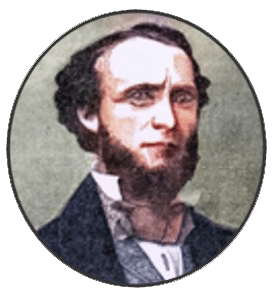
… the editor of the Spiritual Scientist says :"For four succeeding Sundays, Mr. Conkin was a guest at the Presidential mansion." Mr. Conkin has himself alleged … that the Spirits not only urged the subject of the Emancipation Proclamation, but that they, … spelled out, letter by letter, the preliminary draft of that famous document.”[8]
Effects of the Emancipation Proclamation
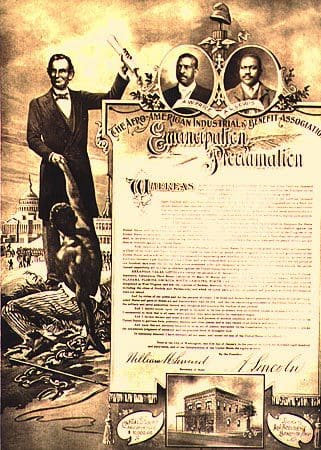
After the Emancipation Proclamation went into effect on January 1, 1863, the formerly enslaved people who reached New Bern, North Carolina, were legally free. This landmark policy accelerated the flow of refugees into Union-controlled areas. Many newly freed slaves decided to join the Union Army.[9]
Conclusion
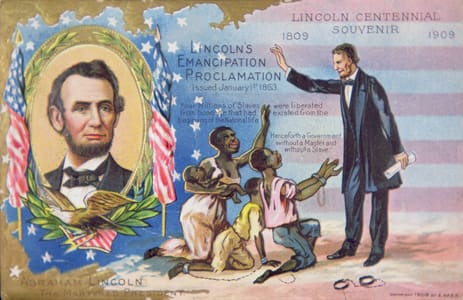
“There is little doubt even as his enemies charged, that Pa’s [Lincoln’s] participation in spirit communication affected his conduct of the war and the administrative decisions and responsibilities of his high office.”[10]
Footnotes
[1] Hamilton, Michelle L. “I Would Still Be Drowned in Tears”: Spiritualism in Abraham Lincoln’s White House. 2013. p. 69.
[2] Hamilton, Michelle L. “I Would Still Be Drowned in Tears”: Spiritualism in Abraham Lincoln’s White House. 2013. p. 69.
[3] Fodor, Nandor. Encyclopædia of Psychic Science. Secaucus, NJ: The Citadel Press, 1966. p. 203.
[4] Shelton, Harriet M. Abraham Lincoln Returns. NY: Evans Pub. Co., 1957. p. 133.
[5] Kase, Simon P. Emancipation Proclamation. NY: International Press, 1861. p. 23. Quoted by: Shelton, Harriet M. Abraham Lincoln Returns. NY: Evans Pub. Co., 1957. p. 134.
[6] Coleman, Christopher Kiernan. The Paranormal Presidency of Abraham Lincoln: Presentiments, Precognition, Prophetic Dreams, & Other Uncanny Encounters of the 16th President of the United States. Atglen, PA: Schiffer Publishing, LTD., 2012. p. 101.
[7] Doyle, Arthur Conan. Our American Adventure. Little, Brown, and Company, 1923. pp. 70-71.
[8] Britten, Emma Hardinge. Nineteenth Century Miracles: or Spirits and their work in Every Country of the Earth. NY: Lovell & Company, 1884. p.485.
[9] Harper's Weekly, February 21, 1863, p. 116.
[10] Fleckles, Elliott V. Willie Speaks Out! The Psychic World of Abraham. Lincoln.St. Paul, MN: Llewellyn Publications, 1974. p. 35.