
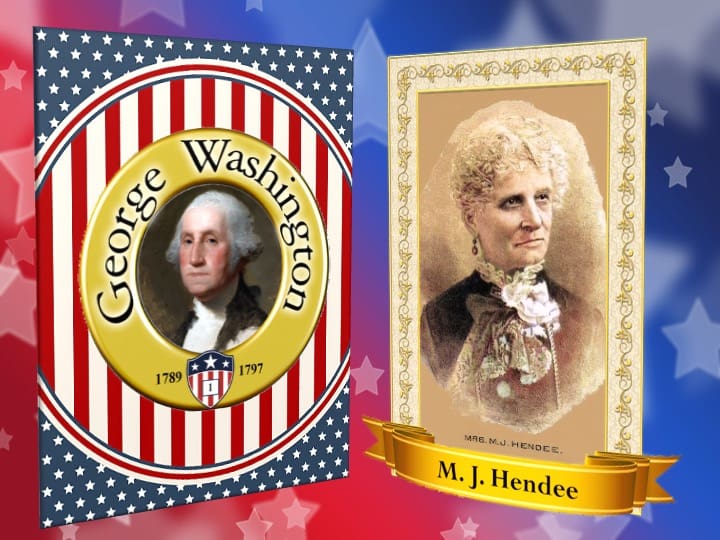
Mrs. M. J. Hendee was a 19th-century American Spiritualist medium. She was a trance medium who also did automatic writing. Hendee is best known for publishing two Spiritualist books, which were transmitted to her by spirits.
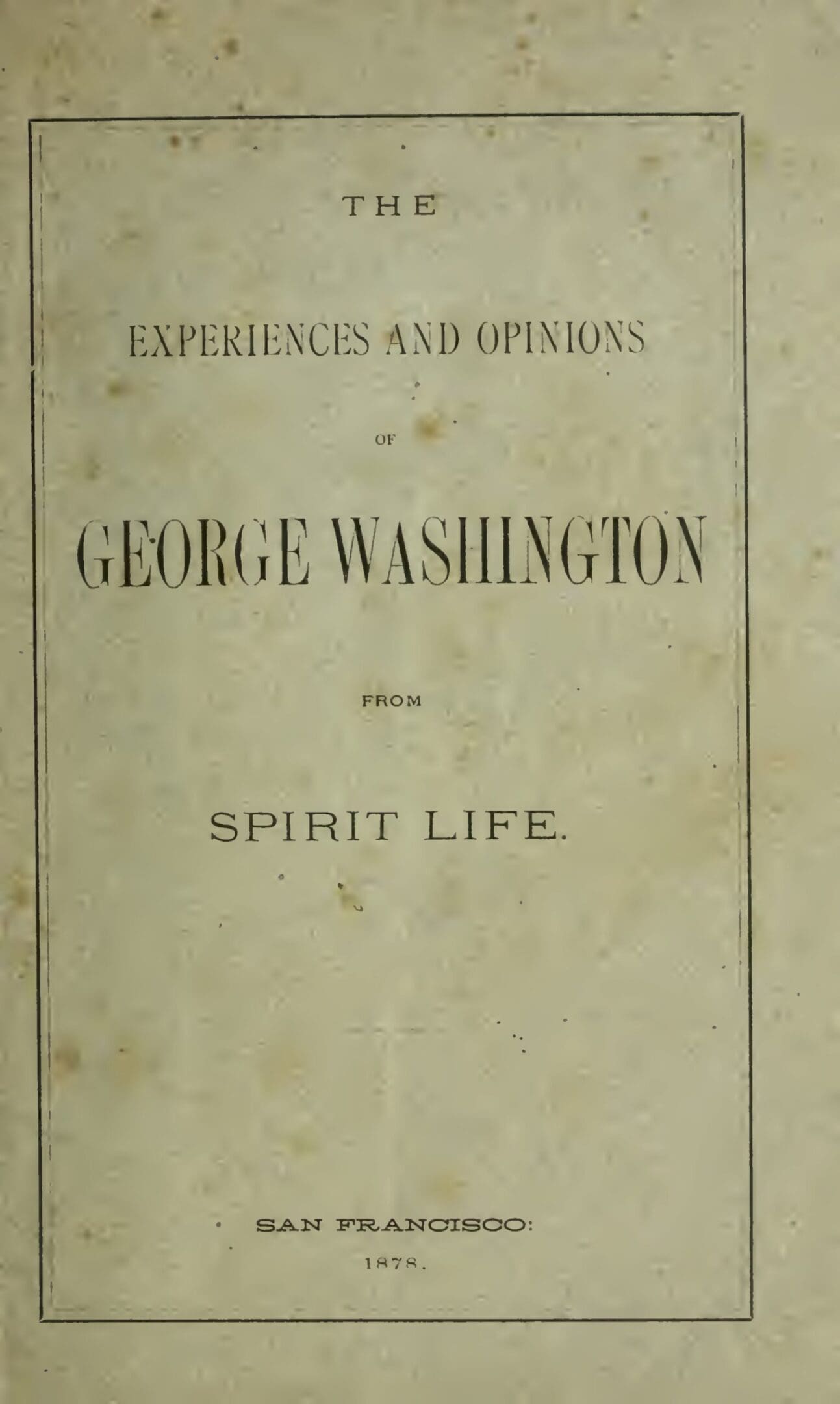
The Experiences and Opinions of George Washington, from Spirit Life, was published in 1868 and was dictated by the Spirit of George Washington. Key themes include:
Reflections on the American Experiment: Washington's spirit comments on the state of the nation following the Civil War, interpreting the conflict as a spiritual event with lessons for the country.
Political Commentary: The Spiritualist Washington shares his perspective on the political developments that occurred after his death. The book contains messages concerning national purpose, morality, and the direction of the government.
Spiritual Instruction: As is typical for Spiritualist texts of this type, the messages contain moral and philosophical instruction. They are presented as guidance for both the individual and the nation, encouraging spiritual growth and civic virtue.
Personal Recollections: The text also includes the Spirit's reflections on Washington's life on Earth, including his role as a military leader and president, but from the perspective of an evolved spirit.
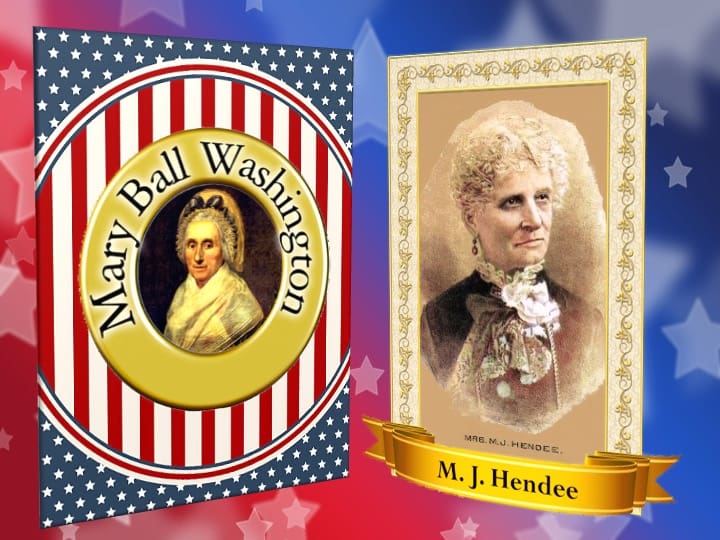
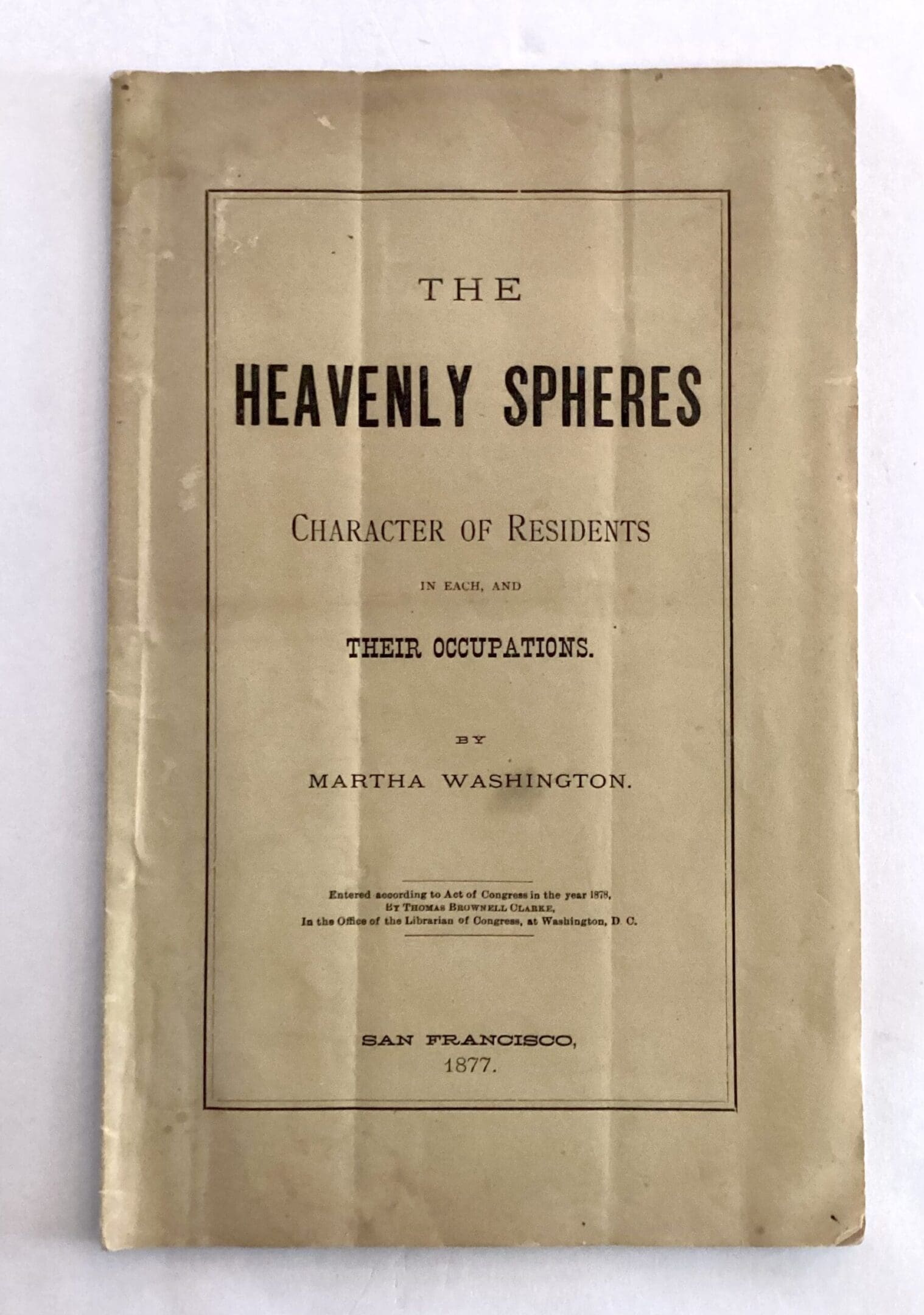
Mrs. M. J. Hendee also communicated with the Spirit of Mary Ball Washington, who authored Hendee's second book, The Heavenly Spheres: Character of Residents in Each and Their Occupations, published in 1877.
The Heavenly Spheres, Character of Residents in Each, and Their Occupations details the structure and activities of the Spirit World. After death, a soul enters the Spirit World, which comprises multiple levels, or "spheres." The soul is drawn to a specific sphere that resonates with the individual's character and inner spiritual state, which was developed during their life on Earth.
Mediumship method: Her mediumship was based on automatic or "trance" writing, in which a medium writes messages that they believe are received from the Spirit World.
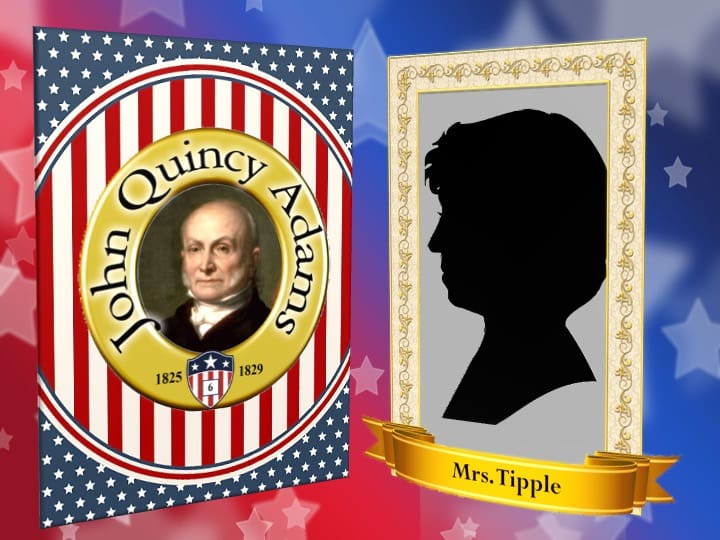
Mrs. Tipple was a spiritualist medium from Rome, New York, whose activities were investigated by William James for the American Society for Psychical Research (ASPR) in the early 20th century. “Mr. Quincey Adams giving explanations and significations of the movements. He seemed to aim to give us all information possible, both by language, illustrative of physical manifestations, and tableaus. Every effort seemed made to impart knowledge to the circle.”[1]
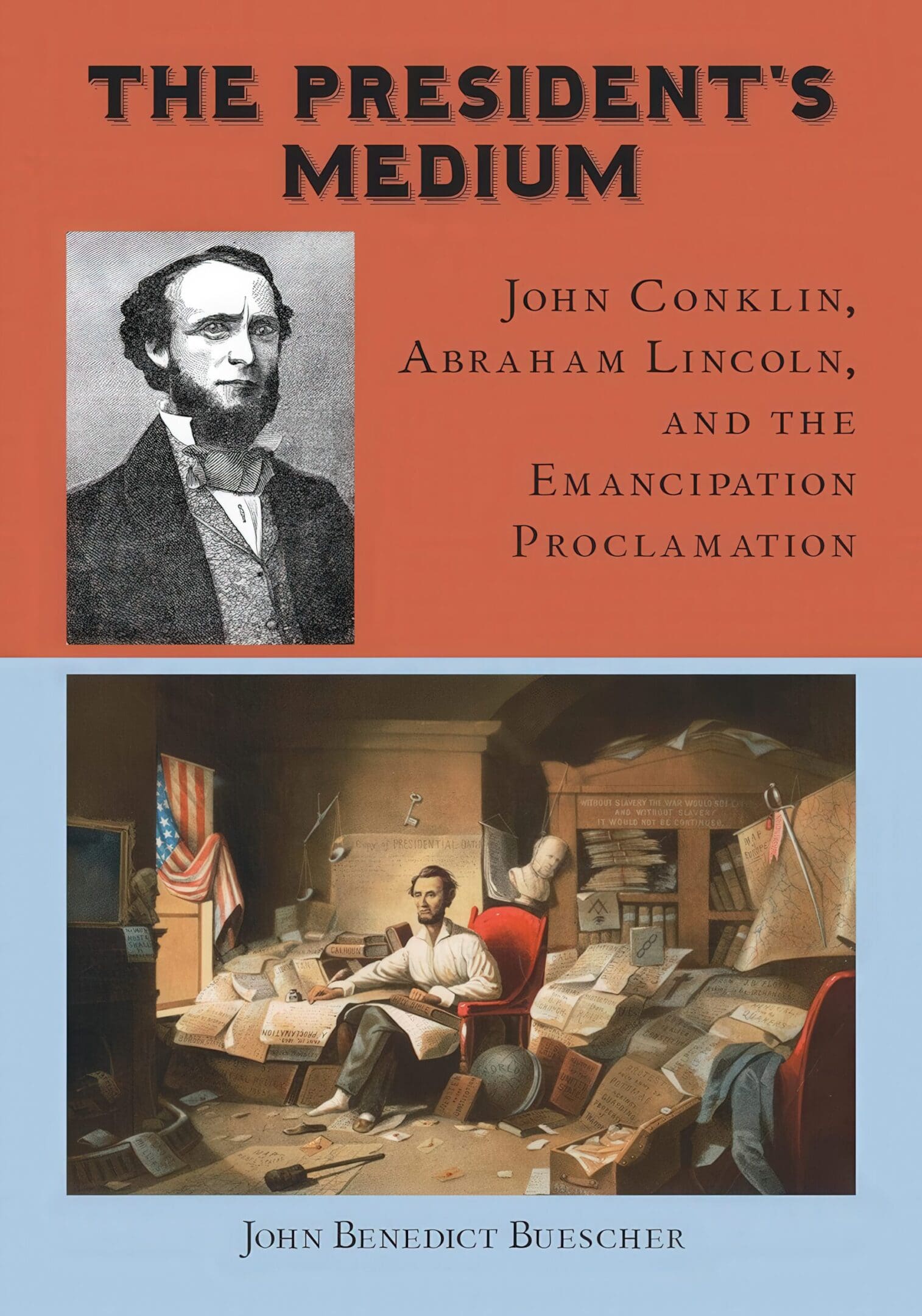
Theo Levi Judd Pardee (1831-1865), like J. B. Conklin, was a test medium who was based for fairly extended periods in Buffalo, New York City, and Philadelphia, as well as Washington. [2] Beyond this footnote in Buescher’s book, little is known of him.
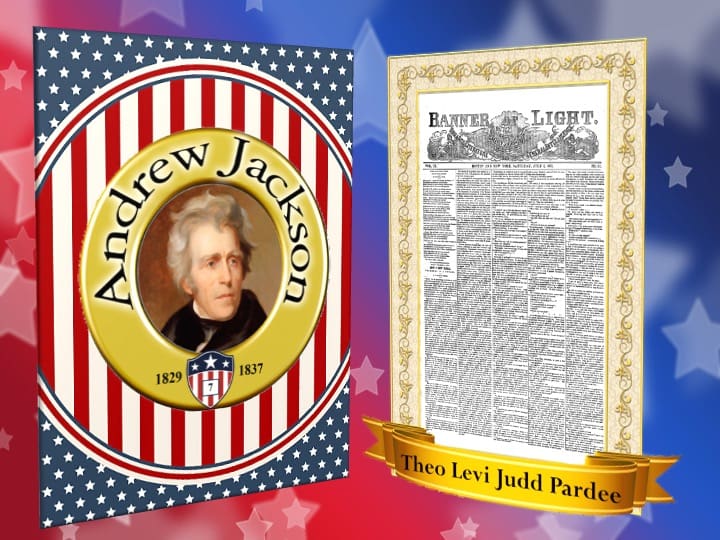
John B. Conklin and Theo Levi Judd Pardee were in Buffalo, NY, when Pardee suddenly went into trance and President Andrew Jackson spoke through him. Jackson states that the United States would feel “the fire and sword,” his poetic way of saying there would be a Civil War. He goes on to say that if the leaders had more foresight, they would change their policies and avoid the war. Jackson states that the politicians are more interested in maintaining a grand image than in making the right decisions to prevent a Civil War.
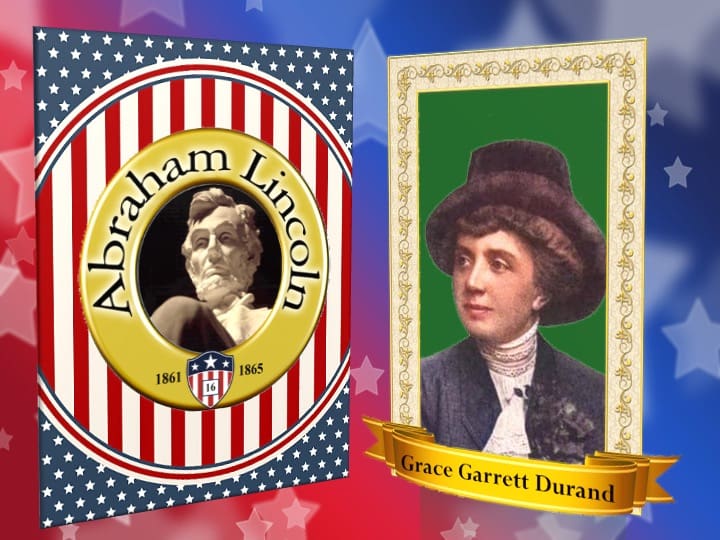
Grace Garrett Durand (1867 – 1948) was a spiritualist medium and the author of Sir Oliver Lodge Is Right: Spirit Communication a Fact. She received a message from Abraham Lincoln. “Mr. Lincoln told me, had he followed his mother’s advice the day of his assassination, he would not have gone to the theater that fateful night, as his mother had warned him not to go.”[3]
[The editor] Herman Behr's Letters from Eternity is a collection of letters that explores the thoughts, beliefs, and experiences of historical figures like Abraham Lincoln, George Washington, and Benjamin Franklin, as they reflect on their lives and the world they left behind. Each letter is written in a distinctive voice and covers a wide range of topics, including politics, religion, philosophy, and personal reflections.
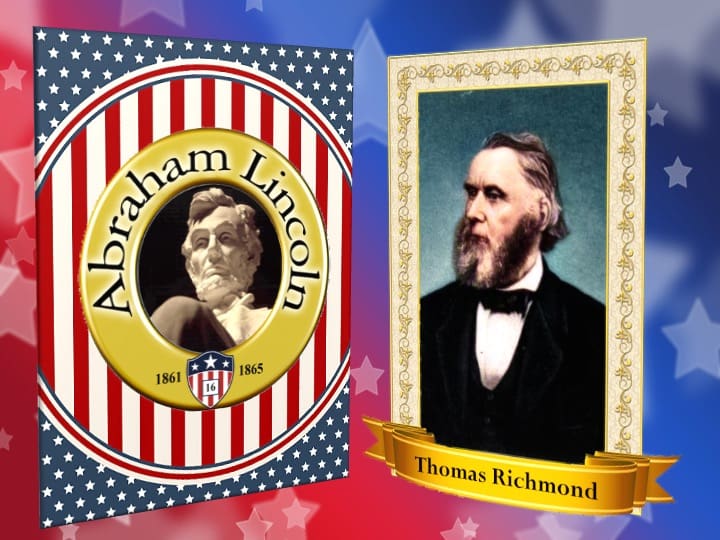
U. S. Senator Thomas Richmond, a respected citizen from Chicago, was a long-time personal friend of Lincoln. He was also a medium and wrote a book either through automatic or inspirational writing. The title was God Dealing with Slavery: God's Instrumentalities in Emancipating the African Slave in America. The Spirit communicators included Benjamin Franklin, Abraham Lincoln, John Quincy Adams, Andrew Jackson, Daniel Webster, and William Penn.
One letter from Abraham Lincoln was dated October 24, 1869. It reads in part: “I can now perceive that I was simply an agent or instrument in His hands, to conduct the rebellion in such a manner that slavery might be abolished.” What could be more Lincolnesque![4]
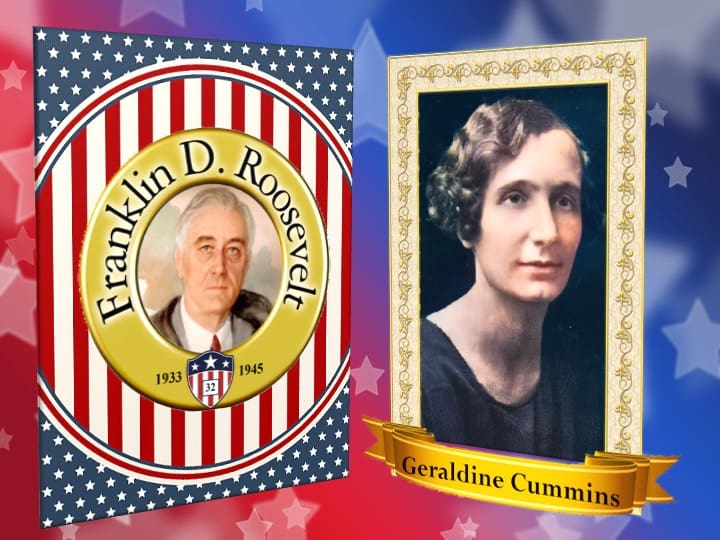
After he died in 1945, Franklin D. Roosevelt's spirit communicated through Spiritualist medium Geraldine Cummins via automatic writing. Roosevelt offered advice to William Lyon Mackenzie King, the Prime Minister of Canada. King was a spiritualist and consulted mediums, including Cummins, for guidance on political and personal issues. Roosevelt's spirit advised Prime Minister King against retiring, saying, "Don't retire, stay on the job. Your country needs you." In 1948, the spirit changed its mind and later warned King about increasing tensions in Asia.
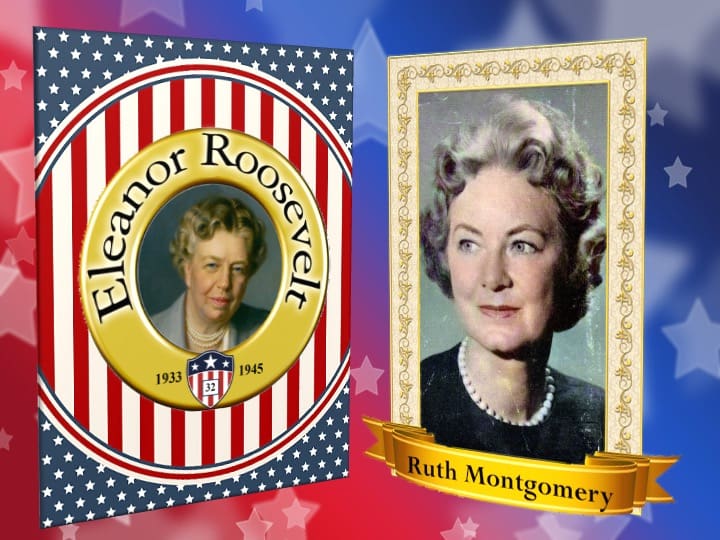
Ruth Montgomery received messages through automatic writing, telling her Eleanor Roosevelt’s spirit was as busy in the next stage of her existence as she was here.[5]
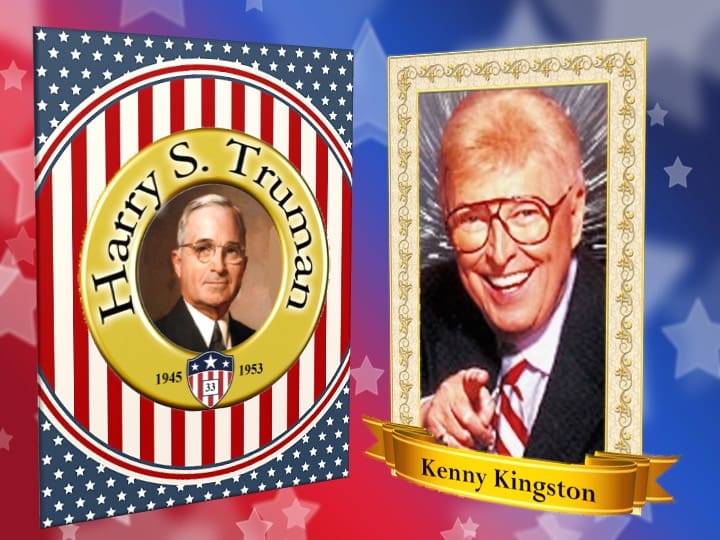
Harry Truman, still as feisty and outspoken as he was on earth, communicated through well-known medium and writer Kenny Kingston.[6]
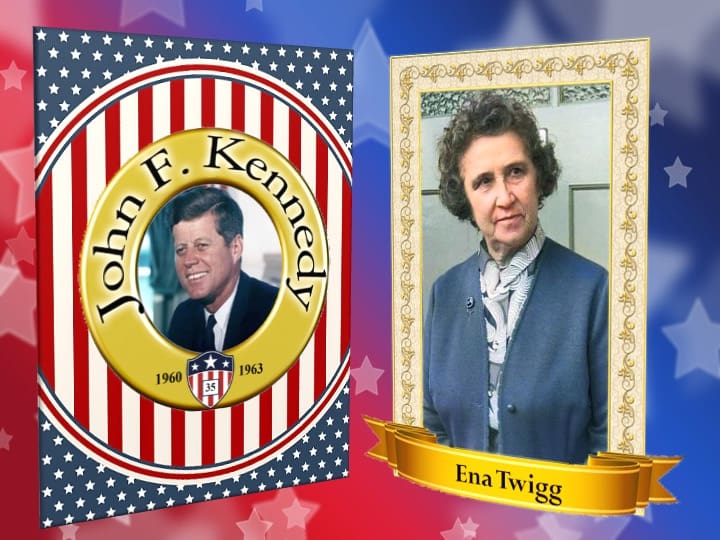
The medium Ina Twigg made contact with the spirit of John F. Kennedy.[7]
“I must point out that I have trained myself to be very wary of spirits who claim the identity of famous personalities. When not downright fraudulent, they can be mischievous entities impersonating celebrities. I always shoo them away, for I have never known any great person to manifest unless there exists a personal bond with the sitter — with the exception of teachers like Philip.
This caution almost caused an embarrassing incident involving the late President John F. Kennedy. The sitter was an English lady of rank and social position. Suddenly, the late President started to interrupt the communication. At first I told him to be off — because I did not for a moment believe it was really the President. What possible connection could he have had with this Englishwoman? When the spirit persisted, I told him if he had any evidence to prove his identity, I would try to transmit it.
"But I knew him well as a boy," the sitter explained. "We were neighbors in America." And that was the first knowledge or hint that I had that my Englishwoman, whom I had known for some time, was a native American.
President Kennedy said, "When I died, I saw it was possible to contact those on earth, but my religious beliefs made me feel that this was not desirable or right. However, I came to this decision: that I could make spiritual progress and serve my country by still attempting to help where I could by drawing near to those open enough to receive my impressions. I am torn because of my love for my country and my religion. I am torn between the two."
"What are you going to do? " I asked him.
"I must come to terms with it," he replied. "My evolution in this world is going to have to be conditioned by how much my people need me."”[5]
Footnotes
[1] Richmond, Thomas. God Dealing with Slavery: God's Instrumentalities in Emancipating the African Slave in America: Spirit Messages from Franklin, Lincoln, Adams, Jackson, Webster, Penn, and Others. Chicago, IL: Religio-Philosophical Publishing House, 1870. p. 57.
[2] Buescher, John Benedict. The President’s Medium: John Conklin, Abraham Lincoln, and the Emancipation Proclamation. Forest Grove, Oregon: The International Association for the Preservation of Spiritualist and Occult Periodicals, 201, 5. p. 27. Footnote 22.
[3] Fleckles, Elliott V. Willie Speaks Out! The Psychic World of Abraham. Lincoln. St. Paul, MN: Llewellyn Publications, 1974. p. 32.
[7] Fleckles, Elliott V. Willie Speaks Out! The Psychic World of Abraham. Lincoln. St. Paul, MN: Llewellyn Publications, 1974. p. 32.
[5] Martin, Joel; Birnes, William J. The Haunting of the Presidents: A Paranormal History of the U.S. Presidency. Old Saybrook, CT: Konecky & Konecky, 2003. p. 367.
[6] Martin, Joel; Birnes, William J. The Haunting of the Presidents: A Paranormal History of the U.S. Presidency. Old Saybrook, CT: Konecky & Konecky, 2003. p. 367.
[4] Martin, Joel; Birnes, William J. The Haunting of the Presidents: A Paranormal History of the U.S. Presidency. Old Saybrook, CT: Konecky & Konecky, 2003. p. 367.
[5] Twigg, Ena; Brod, Ruth Hagy. Ena Twigg: Medium. NY: Hawthorn Books, 1972. P. 172-173.